







SUBSCRIBE TO OUR NEWSLETTER
Get the latest updates on new products and upcoming sales

If you have noticed white crusty stains on your taps, shampoo that refuses to lather, or a geyser that seems to give up every couple of years, hard water is almost certainly the culprit. A water softener for home use solves this problem at the source - before hard water ever reaches your bathrooms, kitchen, or appliances.
Hard water is water that carries high levels of dissolved calcium and magnesium. It is extremely common across India, especially in homes that depend on borewell or tanker supply. While it is generally safe to drink, hard water is rough on everything it touches: skin, hair, clothes, utensils, tiles, pipes, and every water-using appliance in the house.
The damage adds up quietly. Scale builds inside geysers and washing machines, forcing them to work harder and consume more electricity. Pipes narrow over time. Bathroom fittings lose their shine no matter how often you scrub. Skin feels dry and stretched after every bath, and many families notice increased hair fall.
A home water softener system removes the hardness minerals responsible for all of this. Install one on your main water line and every tap in the house delivers soft water - gentler on your family, kinder to your appliances, and far easier on your maintenance budget. On this page, we explain how softeners work, how to recognise whether your home needs one, and how to choose the right capacity for your family.
Not sure how hard your water is? Request a free water hardness consultation from Ionix experts.
A water softener for home is a whole-house water treatment system that removes the dissolved calcium and magnesium minerals that make water hard. It is installed on the main water line - typically near your overhead tank or inlet - so that every bathroom, kitchen tap, and appliance receives softened water.
Most residential softeners work on a principle called ion exchange. Inside the softener tank sits a bed of tiny resin beads. These beads are charged with sodium ions. As hard water flows through the resin bed, calcium and magnesium ions cling to the beads, and harmless sodium ions are released into the water in their place. The water that flows out the other side is soft.
Over time, the resin fills up with captured hardness minerals and needs a rinse. This process, called regeneration, flushes the resin with a salt (brine) solution, washing the calcium and magnesium down the drain and recharging the beads with sodium. In automatic softeners like the Ionix WSA series, regeneration happens on its own - you simply keep the brine tank topped up with salt.
Think of the resin as a sponge for hardness: it soaks up the minerals, gets squeezed clean during regeneration, and goes right back to work. That is the entire system - simple, proven chemistry that has protected homes for decades.
You do not need a laboratory to suspect hard water. Your home shows the evidence every day. If several of these sound familiar, it is time to consider hard water treatment:
• White stains and spots: chalky deposits on taps, shower heads, glass partitions, and utensils that return within days of cleaning.
• Soap that will not lather: you use more shampoo, soap, and detergent, yet get less foam - because hardness minerals react with soap before it can do its job.
• Dry, itchy skin: mineral residue left on the skin after bathing strips natural moisture, causing tightness and irritation.
• Hair fall and dull hair: hard water residue builds up on the scalp and hair shaft, leaving hair rough, tangled, and prone to breakage.
• Appliance breakdowns: geysers, washing machines, and dishwashers failing early or needing frequent servicing due to internal scale.
• Scale buildup: a white or yellowish crust inside kettles, on geyser elements, and around bathroom fittings.
• Slow water flow: scale gradually narrows pipes, reducing pressure at showers and taps.
• Rising maintenance costs: repeated plumber visits, descaling services, and replacement of fittings that should have lasted years.
Homes on borewell water usually see these symptoms fastest, but municipal supply in many Indian cities is hard enough to cause the same problems - just more slowly.
Installing the best water softener for home use pays for itself in comfort and savings. Here is what changes once soft water starts flowing:
• Softer skin: with no mineral film left behind, skin retains its natural moisture. Many families notice the difference within the first week.
• Healthier hair: shampoo lathers properly and rinses out completely, leaving hair smoother and reducing hard-water-related hair fall.
• Spotless utensils and fittings: glassware dries clear, steel shines, and taps stay free of white crust.
• Longer appliance life: geysers, washing machines, and dishwashers run scale-free, which can add years to their working life.
• Lower energy bills: even a thin layer of scale on a geyser element forces it to consume noticeably more power to heat the same water. Soft water keeps heating efficient.
• Better laundry: clothes wash cleaner with less detergent, colours stay brighter, and fabrics feel softer for longer.
• More pleasant showers: richer lather, no sticky after-feel, and shower heads that do not clog.
• Plumbing protection: pipes and fittings stay clear of scale, protecting one of the most expensive systems in your home to repair.
Ready to feel the difference? Shop water softeners from the Ionix range.
Here is the full journey of hard water through a typical Ionix automatic softener:
1. Hard water enters the system. Water from your borewell, tanker, or municipal line flows into the softener installed on your main supply.
2. Water passes through the resin bed. Millions of resin beads attract and hold calcium and magnesium ions - the minerals responsible for hardness.
3. Ion exchange takes place. For every hardness ion captured, the resin releases a sodium ion, keeping the water balanced.
4. Soft water flows to your home. Every tap, shower, geyser, and appliance now receives softened water.
5. The system regenerates. When the resin nears capacity, the softener flushes it with brine from the salt tank, sending the captured minerals to the drain and recharging the beads. In Ionix automatic models this happens without any manual effort.
6. The cycle repeats. The softener returns to service, and your home continues receiving soft water round the clock.
Not every system labelled a softener works the same way. Understanding the categories helps you invest in genuine hard water treatment rather than a partial fix:
• Salt-based (ion exchange) softeners - the proven standard. They physically remove calcium and magnesium and are the right choice for the hardness levels most Indian homes face.
• Salt-free water softeners (conditioners) - these do not remove hardness minerals; they change how the minerals behave so scale sticks less. Suitable only for mildly hard water.
• Dual tank softeners - two resin vessels alternate duty, so soft water is available even while one tank regenerates. Ideal for large families and high daily usage. The Ionix WSA02 Dual Vessel Automatic is built for exactly this need.
• Magnetic and electronic descalers - inexpensive devices with limited independent evidence of effectiveness. We do not recommend them as a primary hard water solution.
• Smart / automatic water softeners - ion exchange systems with automatic, self-managed regeneration, such as the Ionix WSA01 Automatic. Minimal effort, consistent results.
Quick comparison:
|
Type |
How It Works |
Best For |
Maintenance |
Removes Hardness? |
|
Salt-based (ion exchange) |
Resin swaps calcium & magnesium for sodium; regenerates with brine |
Whole-house use, moderate to very hard water, borewell supply |
Salt refill; periodic resin care |
Yes, fully |
|
Salt-free conditioner |
Alters mineral crystals so they don't stick as scale |
Mild hardness, low-maintenance preference |
Very low |
No - conditions only |
|
Dual tank |
Two resin vessels alternate, so soft water is available even during regeneration |
Large homes, high usage, zero downtime needs |
Salt refill; periodic servicing |
Yes, fully |
|
Magnetic / electronic |
Magnetic field claims to alter mineral behaviour |
Not recommended as a primary solution |
Minimal |
No - results unproven |
|
Smart / automatic |
Ion exchange with automatic, metered regeneration |
Busy households wanting a fit-and-forget system |
Salt refill only in most cases |
Yes, fully |
The right water softener for house sizes depends on a few practical factors. Walk through this checklist before you buy:
• Family size: a 2-3 member household has very different needs from a joint family. More people means more litres of water to soften daily.
• Water hardness level: get your water tested (in ppm or mg/L) using a water quality tester. Borewell water in many regions crosses 500 ppm, which demands a robust, full-capacity ion exchange system.
• Daily water usage: estimate total consumption across bathing, laundry, cleaning, and kitchen use. A typical Indian household uses 130-200 litres per person per day.
• Grain / resin capacity: higher capacity means longer gaps between regenerations. Match capacity to hardness multiplied by daily usage - our team can calculate this for you.
• Maintenance style: automatic regeneration models cost slightly more upfront but need almost no attention beyond salt refills. Manual regeneration models are economical if you do not mind a periodic routine.
• Budget: consider total cost of ownership - purchase price plus salt, servicing, and the appliance repairs you will no longer be paying for.
• Installation space: check space near your inlet line or tank area. Compact models suit apartments; larger vessels and combos suit villas and independent homes.
Share your water report and family size with our experts - we will recommend the exact model and capacity, free of charge.
Ionix Filters is one of India's most trusted names in residential water treatment, with over 5,00,000 customers across the country. Here is why homeowners choose us for their hard water solution:
• Technology built for Indian water: our 3-stage softening systems, including India's first 3-stage water softener with high-capacity calcium-holding resin, are engineered for the extreme hardness of borewell and tanker supply.
• Automatic convenience: the Ionix WSA series regenerates on its own - fit it and forget it.
• Premium build quality: from FRP vessels to SS-304 stainless steel combo systems, every unit is built to last in Indian conditions.
• Genuine filtration media: high-grade ion exchange resin that delivers consistent softening across its full service life.
• Long lifespan, low upkeep: our systems are designed for years of reliable operation with minimal maintenance.
• Installation assistance: guided installation support so your softener is set up correctly on the main line from day one.
• Warranty and after-sales support: dedicated customer support, a pan-India service network, and warranty coverage on our softener range, so help is a call away.
A whole house water softener adapts to almost any residential setting:
• Apartments: compact softeners for flats and apartments install near the inlet or utility area and protect the entire flat - yes, apartment owners can absolutely install one.
• Villas and independent homes: full-capacity softeners for kothis and villas or dual tank systems handle higher usage and multiple bathrooms with ease.
• Duplex homes and bungalows: a single main-line installation softens water for every floor.
• Farm houses: ideal for properties running entirely on borewell water, where hardness tends to be highest.
• Builder floors: individual floors can install a dedicated softener on their own supply line.
A residential water softener is one of the lowest-maintenance systems in your home. Keep these habits and it will serve you for years:
• Keep the salt topped up: check the brine tank monthly and refill with recommended softener salt before it runs low.
• Care for the resin: use quality salt and let the system complete its regeneration cycles; this keeps the resin bed healthy.
• Clean the brine tank periodically: an occasional rinse prevents salt bridging and sludge at the bottom of the tank.
• Schedule periodic servicing: an annual check-up with genuine Ionix service kits confirms regeneration timing, valve health, and softening performance.
• Follow the replacement schedule: resin typically lasts many years; replace it when softening performance drops even after regeneration, as advised by your service technician.
Need help with servicing or salt refills? Contact our support team for guided assistance.
The best choice depends on your water hardness and daily usage. For most Indian homes on borewell or mixed supply, an automatic ion exchange softener like the Ionix WSA01 offers the best balance of performance and convenience. Large households should consider the WSA02 dual vessel model.
If you see white scale on taps, experience dry skin or hair fall, or your geyser and washing machine need frequent repairs, your water is hard enough to justify one. A simple hardness test confirms it.
Hard water is generally safe to drink. Its damage is to skin, hair, appliances, and plumbing rather than to health. The minerals it carries are, however, rough on everything they touch externally.
A well-maintained softener typically serves 10-15 years. The resin inside may need replacement earlier depending on water quality and usage, which your service technician can assess.
Very little. Automatic models mainly need periodic salt refills and an annual service check. Manual models add a simple regeneration routine.
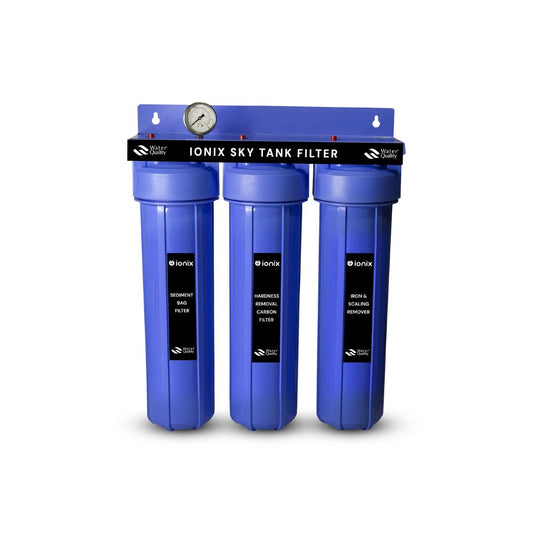
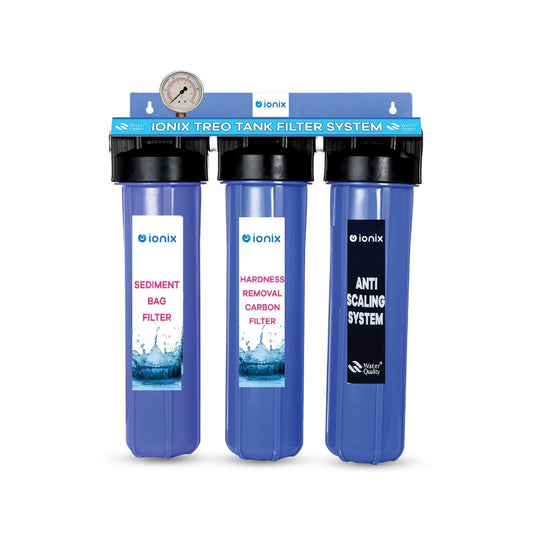
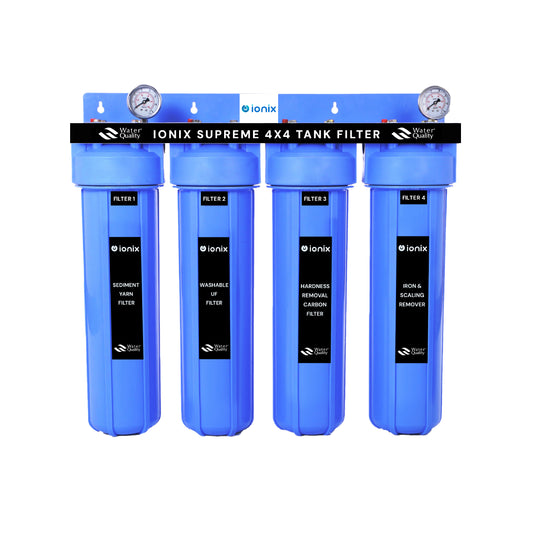
A softener removes hardness, not dissolved salts or microbes. For drinking water, pair your softener with an RO or purification system. For sediment and impurities on the main line, a whole house tank filter is the right companion. Softened water does, however, improve washing, bathing, and appliance performance throughout the house.
For the hardness levels common in India, salt-based ion exchange is the reliable choice because it actually removes calcium and magnesium. Salt-free conditioners only reduce scale sticking and suit mildly hard water at best.
A standard installation on the main water line is usually completed within a few hours, depending on your plumbing layout. Ionix provides installation assistance to get it right the first time.
The main recurring cost is softener salt, plus modest water use during regeneration and periodic servicing. For most families this is far less than the appliance repairs, descaling, and extra detergent that hard water forces on them.
Yes. Compact softeners are designed for flats and install near your inlet line or utility balcony, softening water for the entire apartment.
No - and any brand claiming otherwise should be questioned. A softener exchanges calcium and magnesium for sodium, so overall TDS stays roughly the same. It removes hardness, not total dissolved solids. Use an RO purifier if TDS reduction is your goal.
Absolutely - borewell water is where softeners matter most, as it usually carries the highest hardness. Ionix systems are specifically engineered for Indian borewell conditions.
Yes. With hardness removed, scale stops forming on heating elements and internal parts - one of the biggest reasons these appliances fail early in hard water areas. For added point-of-use protection, appliance filters for washing machines and geysers work alongside your softener.
It depends on water hardness and consumption - typically every few days to weekly for an average household. Automatic Ionix models handle the timing themselves.
Yes. Correct placement on the main line, proper drain connection, and initial programming all affect performance. Our team provides installation support with every softener.
Hard water problems do not fix themselves - they compound quietly, month after month, in your appliances, your plumbing, and your family's daily comfort. Installing the right water softener for home use stops the damage at the source and starts paying you back from the very first shower. Explore the Ionix softener range, read more on the Ionix blog, or talk to our water experts for a recommendation tailored to your home.