



-
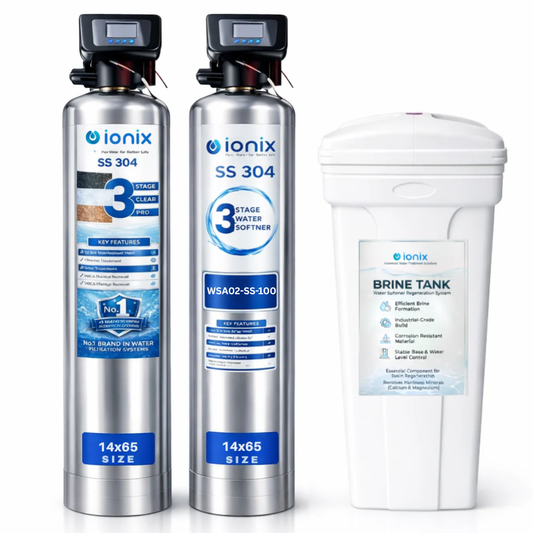
Ionix Stainless Steel Water Softener Combo (14x65 inch) with 200 liter brine tank – 3 Stage Automatic Tank Filter + 100L Resin Softener | SS-304 Build | Zero Maintenance | Whole House Water Treatment SystemIonix Stainless Steel Combo System (14x65 inch) — a powerful whole-house solution designed to handle hard water, sediment, and impurities in one go. This advanced combo brings together the Ionix 3-Stage Clear Pro Automatic Filter and a 100L Resin Automatic Water Softener, delivering clean,...
- Rs. 165,000
- Rs. 165,000
- Unit price
- per
-
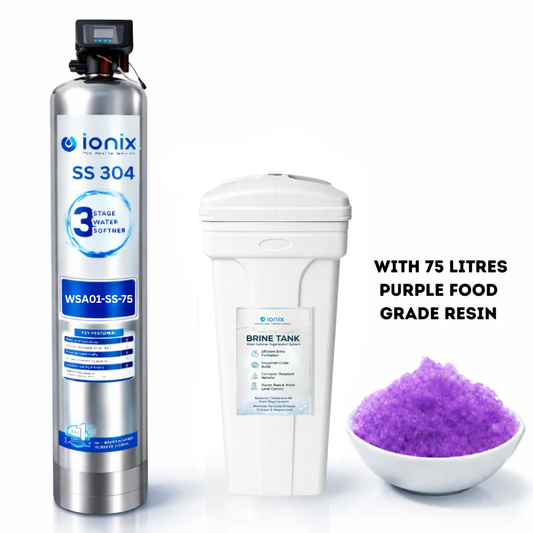
Ionix Stainless Steel Combo – Automatic Water Softener | Zero Maintenance, Max Protection | SS-304 Build for Indian HomesUpgrade your home’s water system with the Ionix Stainless steel & Brine Tank Combo, a powerful pairing of innovation, durability, and convenience. This combo includes the Ionix Automatic Regeneration Water Softener, crafted from premium SS-304 stainless steel to ensure long-lasting performance in all weather conditions. Available...
- Rs. 77,500
- Rs. 77,500
- Unit price
- per
-
Ionix Automatic whole house Water Softener 30 L - Model IBWS-04Say goodbye to hard water troubles in your bathroom with the all-new Ionix 30L Automatic Bathroom Water Softener.Specially designed for taps and showers, this high-capacity unit ensures soft, healthy water every day. With 30 liters of premium resin, it offers double the capacity of standard...
- Rs. 49,800
- Rs. 49,800
- Unit price
- per
-
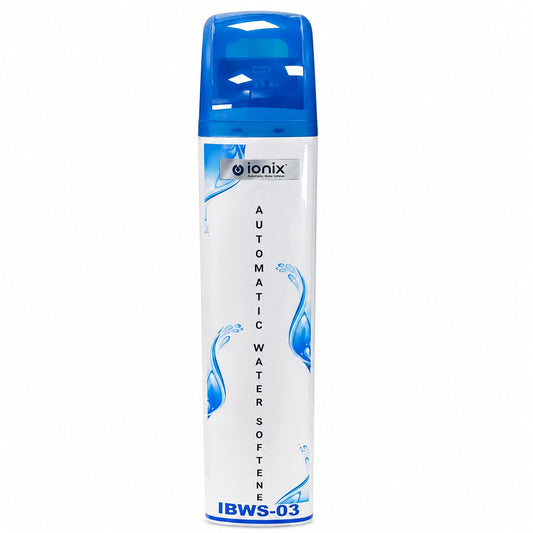
Ionix Automatic whole house Water Softener 20 L - Model IBWS-03Say goodbye to hard water troubles in your bathroom with the all-new Ionix 20L Automatic Bathroom Water Softener.Specially designed for taps and showers, this high-capacity unit ensures soft, healthy water every day. With 20 liters of premium resin, it offers double the capacity of...
- Rs. 39,800
- Rs. 39,800
- Unit price
- per
-
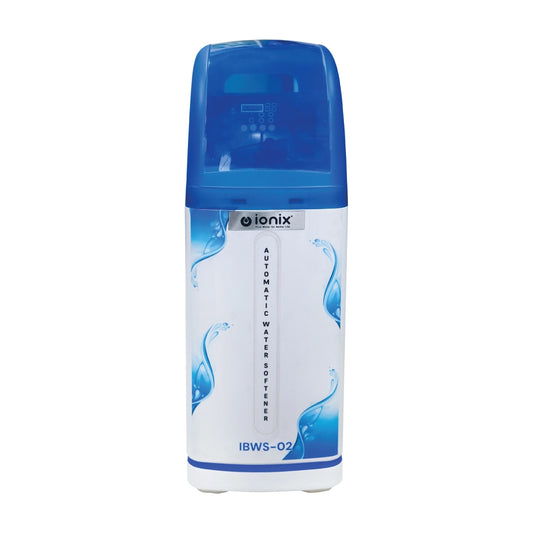
Ionix Automatic Bathroom Water Softener 10L - Model IBWS-02Say goodbye to hard water troubles in your bathroom with Ionix 10L Automatic Bathroom Water Softener. Specially designed for taps and showers, this compact unit ensures soft, healthy water every day. The 10L resin capacity is larger than standard 8L softeners, giving you longer life,...
- Rs. 32,800
- Rs. 32,800
- Unit price
- per
-
Ionix Stainless Steel Combo – 3 Stage Tank Filter + Automatic Water Softener | Zero Maintenance, Max Protection | SS-304 Build for Indian HomesUpgrade your home’s water system with the Ionix Stainless Steel Combo, a powerful pairing of innovation, durability, and convenience. This combo includes the Ionix 3-Stage Clear Pro Tank Filter and the Ionix Automatic Regeneration Water Softener, both crafted from premium SS-304 stainless steel to...
- Rs. 125,000
- Rs. 125,000
- Unit price
- per
-
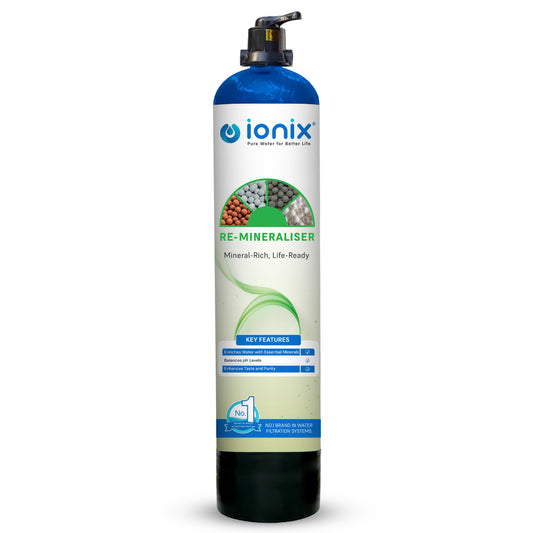
Ionix Re-Mineralizer – Whole House Inline Mineral CartridgeThe Ionix Re-Mineralizer is an advanced inline mineral cartridge designed to revitalize your entire household water supply. Installed directly on the main water line, this innovative system reintroduces essential minerals like calcium, magnesium, and potassium, ensuring healthier, better-tasting water while protecting your plumbing from...
- Rs. 24,990
Rs. 24,990- Rs. 24,990
- Unit price
- per
-
Ionix Water Softener Dual Vessel Automatic (SO-WSA-02) – Advanced Softening with ClearPro AutomaticThe Ionix Dual Vessel Automatic Water Softener (SO-WSA-02) combines cutting-edge softening technology with advanced ClearPro Automatic features, offering superior water purification with minimal maintenance. Engineered for convenience, durability, and efficiency, this fully automated system ensures a continuous supply of soft, high-quality water for both...
- Rs. 92,300
Rs. 92,300- Rs. 92,300
- Unit price
- per
-
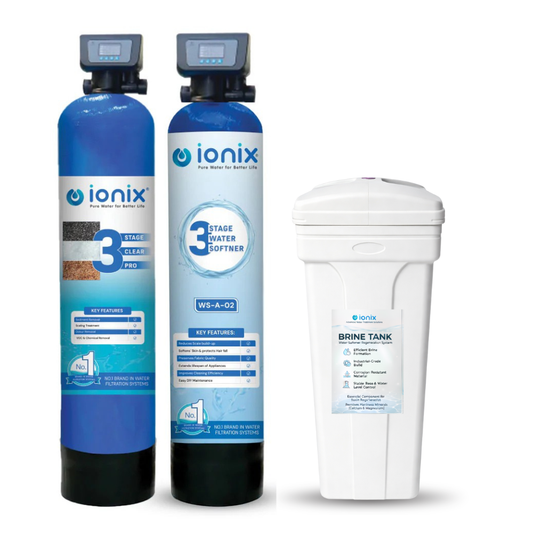
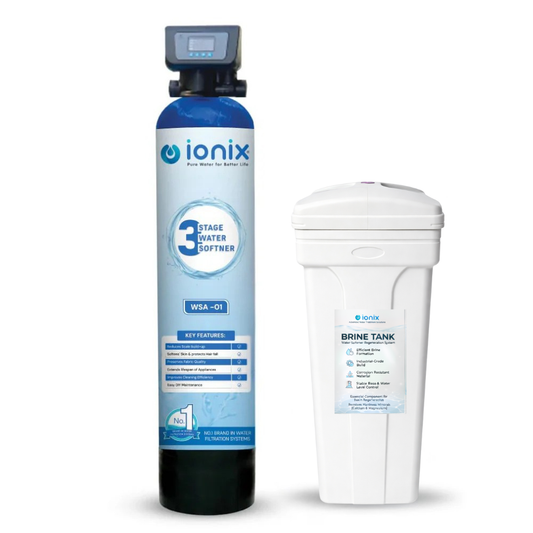
Ionix Ion Exchange Technology Based Automatic Water softener WSA-01 model, India's First 3 Stage water softner with High capacity Calcium Holding Resin , Easy maintenance with Automatic RegenrationIonix High-Quality Automatic Regeneration 3-Stage Water Softener Discover the pinnacle of water refinement with the Ionix High-Quality Automatic Regeneration 3-Stage Water Softener. This low-maintenance marvel employs cutting-edge technology to effortlessly eliminate hardness, sediment, and heavy metals, ensuring pristine water purity. Designed for the discerning...
- Rs. 59,700
Rs. 55,500- Rs. 59,700
- Unit price
- per
-
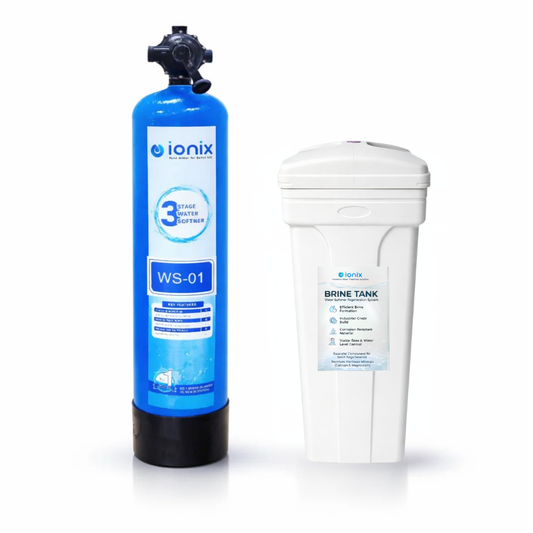
Ionix Ion Exchange Technology Based Water softener, India's First 3 Stage water softener with High capacity Calcium Holding Resin , Low maintenance with Easy RegenrationExperience unparalleled water purity with the Ionix High-Quality 3-Stage Water Softener. Engineered for excellence, this low-maintenance system employs advanced filtration to eradicate impurities, diminish scaling, and soften even the hardest water. Crafted for discerning households, it ensures pristine water quality with minimal upkeep. Elevate...
- Rs. 47,500
- Rs. 47,500
- Unit price
- per















SUBSCRIBE TO OUR NEWSLETTER
Get the latest updates on new products and upcoming sales